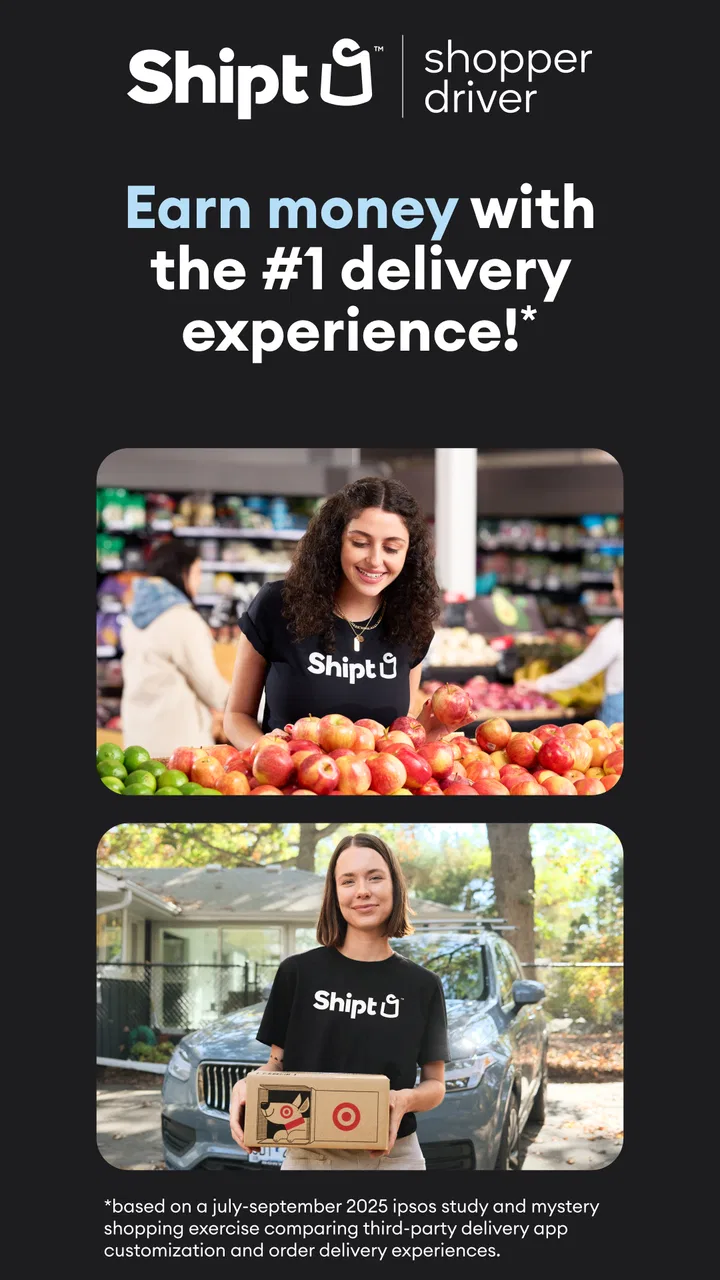
Drive and Shop with Shipt
- 4.2
- Rating
- 1.00M
- Installs
- Free
- Price

 Analysis by App-foxy
I approached Shipt: Shopper and Driver as a practical business app rather than something I would open for entertainment. Its basic appeal is easy to understand: it connects people who want goods delivered with people who want to shop and drive for earnings. After using it, I found that the interesting question is not whether the idea sounds useful, but whether it can become a dependable part of a weekly routine once the initial curiosity wears off.
That distinction matters because delivery work is shaped by timing, organization, travel, and patience. A shopper or driver needs more than a simple way to accept tasks. They need a workflow that fits around real life, including grocery aisles, traffic, substitutions, customer communication, and the less exciting parts of keeping work organized. Shipt, developed by Shipt, is free and aimed at an Everyone audience, but its usefulness depends heavily on which side of the service you use.
What the first week feels like
During the first week, the app is appealing because it gives a clear purpose to otherwise unused time. If I already have a vehicle and am comfortable moving around local stores, the idea of turning errands into paid work feels more flexible than taking a conventional shift. The same app also serves customers who want everyday goods brought to them, so it has a two-sided identity: one experience is about ordering convenience, while the other is about completing deliveries.
You May Also Like

 Blood Strike: 2.5 Anniversary
Blood Strike’s Loadouts Turn Every Drop Into a Tactical Gamble
A close look at Blood Strike’s custom loadouts: how fast access to signature weapons reshapes its battle royale rhythm, rewards preparation, and narrows the gap between fights.

 Pandora - Music & Podcasts
Pandora’s Music Is Easy to Start, but Harder to Recover
Pandora’s strength is its low-effort path from a seed to a station. Its weak spot is how much confidence it asks you to place in connection, setup, and quiet recovery.

 8 Ball Pool
 Is Built on Rivalries, Rematches, and Routine
A close look at the rivalries, rematches, shared routines, and unanswered safety questions that turn a quick pool match into a persistent mobile community.

 Samsung Music
’s Quiet Strength Is Playing What You Already Own
Its reach comes less from spectacle than from dependable access to a personal library. That simplicity is both the app’s strongest retention engine and its ceiling.

 AccuWeather: Weather Radar
AccuWeather Review: A Quick, Clear Forecast for Everyday Decisions
For everyday plans, the best forecast is the one you can understand quickly. AccuWeather makes rain timing, radar, and local conditions easy to act on, with a few trade-offs.

 Hill Climb Racing
Why Hill Climb Racing Still Turns Crashes Into One More Run
A tiny car, a bumpy hill and one more upgrade: Hill Climb Racing keeps resurfacing because its simple chaos makes every near-miss feel personal.
More From Our News Desk



That flexibility is the strongest early impression. I can imagine opening it before or after another commitment, checking what kind of work is available, and deciding whether the timing makes sense. It is particularly attractive to someone who dislikes being locked into a fixed workplace or wants an activity that can be fitted around school, family responsibilities, or another job.
Still, I would not mistake flexibility for effortless income. A delivery task includes more than driving from one point to another. Shopping takes attention, and the final result depends on finding the right items, handling changes sensibly, and arriving when expected. The first week can feel rewarding because every part of the process is new, but the routine quickly exposes whether the work matches a person’s temperament.
For customers, the early appeal is different. The app can reduce the need to make a separate shopping trip, which is useful when time matters more than browsing. I see the greatest value for someone managing a busy day, caring for a child, dealing with limited mobility, or trying to avoid a crowded store. The trade-off is that convenience shifts the work to another person, so the quality of the experience depends on clear choices and reasonable expectations.
The app has a 4.3 average from around 40 thousand ratings, with more than 1 million installs. Those figures suggest that it has reached a substantial audience, but they do not remove the need to judge whether its workflow suits me personally. A popular delivery platform can still be a poor fit if the available work, shopping locations, or daily schedule do not line up with my needs.
How I would use it in an ordinary day
A realistic scenario would be a Saturday morning when I already plan to drive near a supermarket. Instead of treating the app as a separate full-day commitment, I could build a delivery window around that route. Before accepting anything, I would consider the store location, the likely time spent inside, and whether the destination sends me far away from the area where I want to continue. That small planning habit is more important than simply chasing the next available task.
For a customer, the same Saturday might involve preparing a list earlier rather than waiting until the last minute. A detailed list reduces avoidable back-and-forth and makes substitutions easier to handle. I would be specific about brands, sizes, and acceptable alternatives, especially for household staples. Vague requests create friction for the shopper and can turn a convenient order into a series of decisions that neither side wanted.
One useful insight is that the app rewards people who think in routes, not isolated deliveries. A task that looks attractive by itself may be less appealing if it leaves me in an inconvenient area afterward. Likewise, a customer who orders at a busy time should expect the process to demand more patience than a simple click-and-wait service. The real skill is matching the app to a manageable rhythm.
Month-to-month value after the novelty fades
After the first few weeks, the main question becomes repeatability. I would keep using Shipt if it helped me make sensible use of time I already had available, not if it required constant attention to produce a worthwhile routine. The platform is more convincing as a flexible supplement than as a promise of effortless, predictable work. That distinction should shape expectations before anyone starts relying on it heavily.
For shoppers and drivers, recurring value comes from learning the local pattern. Familiar stores can reduce the time spent searching, and familiar routes can make planning less stressful. I would pay attention to which locations are easy to navigate, which trips create awkward returns, and which periods fit my schedule. This is not a flashy feature, but it is where long-term efficiency comes from: personal knowledge gradually replaces guesswork.
There is also a financial trade-off that is easy to overlook. The app may help generate same-day earnings, but the work still consumes fuel, vehicle time, and physical energy. A delivery that appears worthwhile before the trip may feel different after shopping, loading, driving, and returning. I would keep a simple private record of time and travel so that I could judge the routine honestly instead of looking only at the amount associated with each task.
That record is one of my strongest practical recommendations. I would note the total time from leaving home to finishing the delivery, along with unusual delays and extra driving. After several weeks, the pattern would show whether the work is genuinely useful or merely busy. This is especially important for anyone considering Shipt as a regular source of earnings rather than occasional support.
For customers, month-to-month value depends on whether delivery solves a recurring problem. If I frequently lose time to shopping trips, the service can become a habit that protects my schedule. If I enjoy choosing products in person or usually live close to a convenient store, the benefit may fade quickly. The app is not automatically better than shopping myself; it is better when my time, energy, or mobility is more valuable than the trip.
Compared with ordinary grocery shopping, Shipt offers convenience and delegation. Compared with a fixed job, it offers more control over when I participate but less certainty about how attractive each opportunity will feel. Compared with other delivery alternatives, the important comparison is not just the app interface. I would compare the actual routes, store familiarity, customer communication, and impact on my vehicle. A smoother-looking app cannot compensate for a routine that drains time or creates unhelpful travel.
Small habits that improve the experience
I found that preparation matters more than speed. For shoppers, checking the complete task before setting out helps prevent a rushed decision based on one appealing detail. I would group the shopping mentally by store section, keep delicate goods in mind when loading, and avoid promising myself that every order will be quick. A calm process is less likely to produce missed items or careless substitutions.
For customers, precise instructions are a practical advantage. I would identify acceptable replacements where possible and respond promptly when a decision affects the order. This does not guarantee perfection, but it reduces the number of moments where the shopper has to guess. Clear communication also makes the experience fairer: the customer gets a more useful order, and the person doing the work spends less time waiting.
Another non-obvious trade-off is emotional rather than technical. A shopper may be comfortable with driving but dislike the uncertainty of dealing with changing requests. A customer may appreciate delivery but feel frustrated when a preferred item is unavailable. The platform works best when both sides treat the process as a coordinated errand instead of expecting a completely invisible service.
The maintenance burden of keeping it useful
Shipt is not the kind of app I could install once and forget. Its value depends on keeping my schedule, routes, and expectations organized. The current version is 4.111.0 and it supports devices running Android 7.0 or newer, which makes it accessible to many Android users, but compatibility alone does not remove the everyday maintenance involved in using a delivery platform well.
My maintenance routine would be simple but deliberate. Before working, I would check whether the timing fits my other plans, confirm that I have enough energy for shopping and driving, and think about where the route leaves me. Afterward, I would review whether the task was worth the time and whether anything repeatedly caused trouble. This kind of review prevents the app from quietly taking over more of the day than intended.
Customers have their own maintenance burden. Keeping lists accurate, updating preferences, and being available for necessary decisions can make the service much smoother. If I place an order while distracted and then ignore messages, I am making the shopper’s job harder. The convenience is real, but it works best when I contribute a little organization on my side.
The app’s free price removes an obvious barrier to trying it, but free installation should not be confused with zero cost in every use case. A shopper still gives time and vehicle capacity. A customer gives up some control over the exact shopping experience. I would evaluate the app according to the value of that exchange, not simply because downloading it costs nothing.
There is also a difference between occasional and habitual use. Occasional shoppers may not need a detailed system; they can experiment and learn. Regular shoppers should be more disciplined because small inefficiencies repeat. Regular customers should also decide whether delivery is solving a genuine recurring need or becoming an expensive substitute for a trip they could easily manage themselves.
Where the routine starts to feel tiring
The first source of fatigue is repetition. Walking through stores, checking products, handling changes, and driving the final distance may be manageable for a while, but the work can become mentally heavy when every task requires the same level of attention. The app does not change the basic nature of errands. It organizes them, but it cannot make physical work disappear.
The second source is uncertainty. A schedule that looks open can change once traffic, store congestion, product availability, or customer communication enters the picture. I would avoid building important personal commitments too tightly around delivery work. Leaving no buffer turns a flexible app into a source of stress, especially when a small delay affects the rest of the day.
There is also fatigue from poor task selection. Accepting work too quickly can lead to routes that are inconvenient, stores that take longer than expected, or a finish point that makes the next task difficult. My practical rule would be to pause before accepting and ask whether the whole trip makes sense, rather than judging the task by its most attractive detail.
Customers can experience a different kind of frustration when convenience meets imperfect availability. A delivery service is not a magic replacement for personal control inside a store. If a product matters greatly, I would keep a backup plan instead of assuming that the first choice will always be available. For routine goods, that flexibility is easy; for specific items, it may be more difficult.
These limitations are why I would not recommend Shipt equally to everyone. It may be a poor fit for someone who needs guaranteed income, dislikes driving, cannot comfortably spend time shopping, or wants a completely predictable schedule. It may also be unnecessary for a customer who has an easy, inexpensive shopping routine and enjoys making product choices personally.
On the other hand, I think it suits people who value control over their time, are comfortable with practical errands, and can judge opportunities without rushing. Customers who regularly face time pressure or mobility challenges may find the service more valuable than someone who simply wants to try another shopping app. The best match comes from a specific need, not from novelty.
Does it earn a lasting place?
My long-term view is cautiously positive. Shipt: Shopper and Driver earns lasting space when I treat it as a tool that supports a routine, not as a shortcut to easy money or effortless shopping. Its strongest quality is the way it can connect flexible delivery work with a customer’s need for convenience. Its weakest point is that the real effort remains substantial, and the value of each use depends on planning.
I would recommend it to a potential shopper who is willing to track time, think about routes, and accept that some days will be more suitable than others. I would recommend it to customers who have a recurring reason to avoid store trips and are prepared to make clear choices. In both cases, the app becomes more useful when the user takes an active role in shaping the experience.
The service has been available since Apr 14, 2015, and its continued presence alongside a sizable user base suggests that the concept has staying power. Its Everyone content rating also makes the app broadly approachable, although the practical demands of shopping and driving are still adult responsibilities in many real-world situations. I would judge it by whether it improves my weekly routine, not by how quickly I become familiar with the interface.
For me, the decisive test is simple: after the excitement of trying it disappears, does it save time, create worthwhile flexibility, or solve a repeated problem? If the answer is yes, Shipt can become a useful part of a monthly routine. If every use feels like a rushed errand with too much travel and too little control, another local shopping method or a different delivery option may be better.
Overall, I see this Business app as practical rather than glamorous. It asks for organization from shoppers, cooperation from customers, and honest accounting from anyone concerned about time or vehicle costs. That is also why I find it more credible than a service that presents delivery as effortless. The lasting value is in disciplined use: choose suitable tasks, prepare clearly, leave room for delays, and review whether the routine is genuinely helping.
FAQs for Drive and Shop with Shipt
01What is Shipt: Shopper and Driver and how does it work?
Shipt: Shopper and Driver is an app designed for independent contractors who want to earn money by shopping for and delivering groceries. Once you sign up and are approved, you can choose available orders, shop for the items, and deliver them to the customer's doorstep. The app offers flexibility, allowing you to work on your own schedule.
02What are the requirements to become a Shipt Shopper?
To become a Shipt Shopper, you must be at least 18 years old, have a valid U.S. driver’s license and auto insurance, and own a reliable vehicle. Additionally, you need to be able to lift 40 pounds, have an Android or iOS smartphone, and pass a background check. Familiarity with grocery shopping is also a plus.
03How does scheduling work for Shipt Shoppers?
Shipt offers a flexible scheduling system. Shoppers can set their availability within the app and choose from available delivery windows. This flexibility allows you to work as little or as much as you want, making it a great option for those looking for part-time work or supplemental income. However, high-demand times may offer more opportunities.
04What is the payment structure for Shipt Shoppers?
Shipt Shoppers are paid per order, and the pay includes a base amount plus any tips received from customers. Payment can vary based on the size and complexity of the order, as well as the distance traveled. Shipt pays weekly via direct deposit, and shoppers can track their earnings in the app.
05Are there any tips for succeeding as a Shipt Shopper?
To succeed as a Shipt Shopper, focus on excellent customer service and communication. Ensure accurate and timely deliveries, and keep customers informed about any changes or substitutions. Being familiar with store layouts and efficient shopping practices can also help you complete orders faster, potentially increasing your earnings.
Pros
- Flexible working hours for drivers.
- User-friendly app interface.
- Real-time order updates.
- Wide coverage in major cities.
- Instant earnings after delivery.
Cons
- Limited customer support options.
- Occasional syncing issues.
- Requires reliable internet connection.
- High competition among drivers.
- No guaranteed income stability.

Drive and Shop with Shipt
Gallery